


In our hyper-connected world, convenience is king. The rise of QR codes and instant payment systems like BLIK, Zelle, or Pix has revolutionized how we transact, turning complex banking operations into a simple scan or a few taps on a smartphone. This speed and simplicity, however, have a dark side. The very features that make these technologies so appealing—their immediacy and finality—also make them a prime target for fraudsters. Scammers have developed sophisticated methods to exploit user trust and the mechanics of these systems, enabling them to steal money in seconds, often with little to no chance of recovery through traditional means. This new frontier of cybercrime requires a new level of awareness and vigilance from both individual users and corporations.
This article delves into the dangerous intersection of convenience and crime. We will explore the most common abuse scenarios involving QR codes and instant payments, providing you with the knowledge to recognize these threats before you fall victim. Furthermore, we will outline crucial educational points for users and detail robust payment policies that companies must adopt to create a more secure financial environment and make life significantly harder for those who seek to exploit these powerful tools for illicit gain.
Spis treści:
- Understanding the Threat: Why Instant Payments are a Scammer’s Dream
- Common Attack Scenarios: How Fraudsters Exploit QR Codes and Instant Payments
- The Rise of “Quishing”: When QR Codes Lead to Theft
- Marketplace and Classifieds Fraud: The Seller and Buyer Scams
- Building Your Defense: Essential Security Practices for Individuals
- Corporate Fortification: Policies to Protect Your Business
- What to Do if You Are a Victim
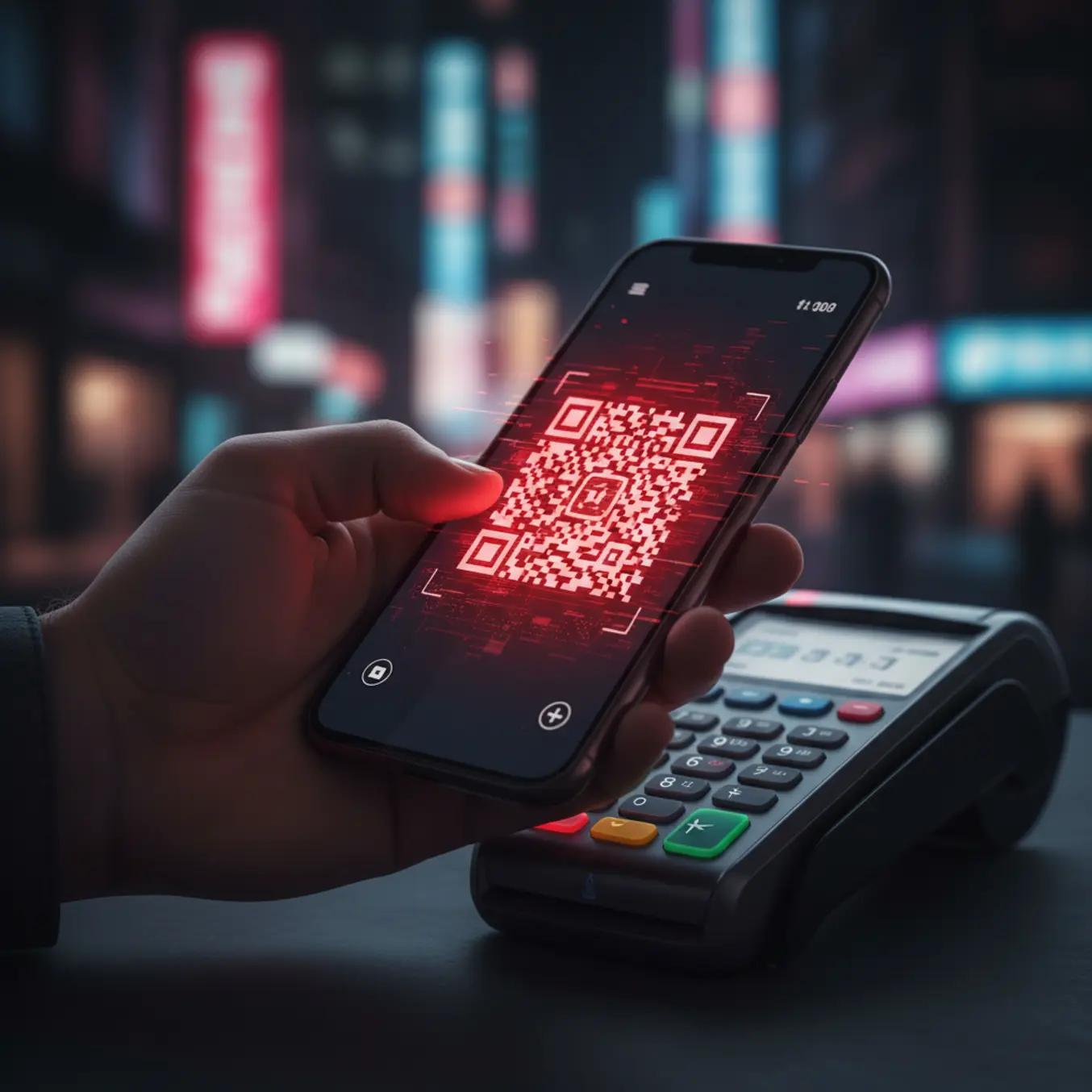
Understanding the Threat: Why Instant Payments are a Scammer’s Dream
To effectively combat a threat, one must first understand its nature. The appeal of instant payment systems for fraudsters lies in two core characteristics: speed and irreversibility. Unlike credit card transactions, which have built-in consumer protections and chargeback mechanisms, instant payments are more akin to handing over physical cash. Once the transaction is authorized and the money is sent, it is typically gone for good. The transfer happens in real-time, moving funds from one account to another in a matter of seconds. This gives the victim virtually no time to second-guess their decision or halt the process once initiated.
Fraudsters thrive in this environment. They know that if they can successfully manipulate a victim into authorizing a payment, the funds will be in their control almost instantly. They can then quickly move the money through a series of other accounts or convert it to cryptocurrency, making it incredibly difficult to trace and recover. This operational security for the criminal is a nightmare for the victim and law enforcement. The entire scam, from initial contact to the final theft, can be over in minutes, long before the victim fully comprehends what has happened.
Common Attack Scenarios: How Fraudsters Exploit QR Codes and Instant Payments
Criminals are masters of social engineering, using psychological manipulation to trick people into divulging sensitive information or making payments against their own interests. When combined with the efficiency of instant payments, these tactics become incredibly potent. One of the most widespread and emotionally manipulative scams is the “friend in need” or “family emergency” attack.
The scenario usually begins with the fraudster gaining access to someone’s social media or messaging account, such as Facebook Messenger, Instagram, or WhatsApp. They then impersonate the account owner and send frantic messages to their list of friends and contacts. The messages create a sense of urgency and distress, claiming a sudden emergency—a car accident, a lost wallet, an urgent medical bill—and asking for a quick, small loan. To make the payment easy, they ask the victim to generate and send an instant payment code (like a BLIK code). Trusting they are helping a friend in a genuine crisis, the victim generates the code from their banking app and sends it. The scammer immediately uses this code at an ATM to withdraw cash or to make an online purchase. The victim only realizes they’ve been scammed when they later speak to the real friend, who has no knowledge of the request.
The success of this scam hinges on a few key factors:
- Impersonation: By using a compromised account, the scammer leverages the pre-existing trust between the victim and their friend.
- Urgency: The manufactured crisis pressures the victim to act quickly without thinking critically or taking time to verify the request.
- Convenience: The request is for a payment method that is designed to be fast and simple, lowering the barrier to action.
The Rise of “Quishing”: When QR Codes Lead to Theft
“Quishing,” or QR code phishing, is a rapidly growing attack vector. A QR code is essentially a visual hyperlink; your phone scans it and performs an action, such as visiting a website or initiating a payment. Scammers exploit this by replacing legitimate QR codes with malicious ones.
Consider public spaces where QR codes are common. A fraudster might place a sticker with their own malicious QR code over the official one on a parking meter, an electric scooter rental station, or a restaurant table menu. An unsuspecting user scans the code, expecting to pay for parking or view a menu. Instead, they are directed to a phishing website. This website is a perfect replica of the legitimate payment portal. When the user enters their banking login, password, or credit card details, they are sending them directly to the scammer. This is a classic example of the kind of attacks detailed in articles about phishing and fake payments.
Another variation of this attack involves QR codes that directly initiate a payment. The code might be presented as a way to receive a discount or enter a contest. When scanned, it opens the user’s banking app with a pre-filled payment request to the scammer’s account. If the user is not paying close attention to the payment confirmation screen—which shows the recipient’s details and the amount—they might approve the transaction, thinking they are simply confirming their entry into a promotion.
Always treat QR codes from unverified sources with the same suspicion you would a strange link in an email. A simple scan can lead to significant financial loss if you are not vigilant.
Marketplace and Classifieds Fraud: The Seller and Buyer Scams
Online marketplaces like Facebook Marketplace, OLX, and Vinted are fertile ground for fraudsters who exploit the trust inherent in peer-to-peer transactions. They have developed clever scams targeting both buyers and sellers, often using the lure of instant payments as a key component of their scheme.
In the “Fake Buyer” scam, a fraudster contacts someone who is selling an item. They express keen interest and agree to the price. However, instead of proposing a normal payment method, they insist on using a “secure” third-party courier service or a special marketplace payment platform. They will claim they have already paid for the item and the shipping, and all the seller needs to do is click a link or scan a QR code they provide to “accept the funds” or “finalize the shipping details.”
This link, of course, leads to a sophisticated phishing page designed to look exactly like the courier’s or marketplace’s website. The page will ask the seller to enter their bank card details (including the CVC code) or their online banking credentials, supposedly to “link their account” for the payment. In reality, they are handing over full access to their funds. Sometimes, the site will prompt the seller to approve a transaction in their banking app, disguising it as a “payment confirmation” when it is actually an authorization for the scammer to withdraw money. These tactics are a dangerous evolution of common phishing attacks.
Conversely, the “Fake Seller” scam targets hopeful buyers. A scammer will post a listing for a high-demand item (like a games console or a designer handbag) at a price that is too good to be true. They will create a sense of urgency, claiming they have many other interested buyers. To secure the item, they will insist on an immediate upfront payment via an instant transfer system. Once the victim sends the money, the “seller” disappears, deleting the listing and their account, leaving the buyer with no product and no way to get their money back.
Building Your Defense: Essential Security Practices for Individuals
Protecting yourself from these fast-paced scams requires a shift in mindset. Convenience cannot come at the cost of security. Adopting a few key habits can drastically reduce your vulnerability to fraud.
Verify Before You Transact
This is the golden rule. If you receive an unexpected request for money, even from a person you know, stop and verify it through a different communication channel. If a friend messages you on Facebook asking for a BLIK code, close the app and call them on their phone number. A quick conversation will almost always reveal the scam. Do not use the contact information provided in the suspicious message; use a number you already have saved for them. This simple step foils the impersonation tactic at the heart of many scams.
Scrutinize QR Codes and Links
Before you scan any QR code in a public place, take a moment to inspect it physically. Does it look like a sticker placed on top of another code? Does it seem out of place? When you do scan a code, pay close attention to the URL that your phone displays before you tap to open it. Does it look legitimate? Are there any spelling errors or strange characters? If the URL is shortened (like a bit.ly link), be extra cautious, as this can hide the true destination. For anyone wanting to protecting yourself from fake payment scams, this vigilance is non-negotiable.
Read Every Confirmation Screen Carefully
Your banking app is your last line of defense. Scammers rely on you being in a hurry and just clicking “Confirm” without reading the details. Before you ever approve an instant payment or enter a code, stop and carefully read the entire confirmation screen.
- Check the Action: Does the screen say “Payment” or “Withdrawal” when you were expecting to receive money?
- Verify the Recipient: Do you recognize the name of the person or company receiving the funds?
- Confirm the Amount: Is the amount correct?
If anything on that screen seems even slightly wrong or unexpected, cancel the transaction immediately. A legitimate transaction can always be re-initiated; a fraudulent one is irreversible.
Corporate Fortification: Policies to Protect Your Business
Businesses are not immune to these threats; in fact, they are often more attractive targets due to the larger sums of money involved. A single fraudulent transaction can result in significant financial and reputational damage. Therefore, companies must move beyond simple user awareness and implement strict, formalized policies to mitigate these risks.
The first and most critical policy is mandatory, ongoing employee training. It is not enough to send a single email about phishing. Companies should conduct regular training sessions that include real-world examples of QR code, instant payment, and business email compromise (BEC) scams. Simulations can be particularly effective, helping employees learn to recognize red flags in a safe environment. Understanding the nuances of these attacks is crucial, and you can learn more about phishing and other related threats to better inform your training programs.
Secondly, businesses must enforce a policy of dual authorization for payments. This principle, also known as “four eyes,” requires that any payment, especially one exceeding a certain threshold or involving a change in vendor payment details, must be approved by at least two separate individuals. This creates a critical check-and-balance system. If one employee is tricked by a fraudulent invoice with a QR code for payment, a second, clear-headed approver is likely to spot the anomaly before the funds are sent.
Finally, companies need to establish a strict vendor verification process. Fraudsters will often send expertly forged invoices that look identical to those from a legitimate supplier, but with their own bank account details or a QR code for payment. Any request to change a vendor’s payment information must be independently verified through a pre-established, trusted contact channel (e.g., a phone call to a known number at the vendor’s office), not by replying to the email that made the request. This prevents scammers from intercepting communications and “approving” the fraudulent change themselves.
What to Do if You Are a Victim
If the worst happens and you realize you have been scammed, time is of the essence. You must act immediately.
- Contact Your Bank: Call your bank’s fraud department immediately. While instant payments are hard to reverse, reporting it instantly is your only chance. They can freeze accounts and cooperate with the recipient’s bank.
- Report to the Police: File an official police report. This is a necessary step for any legal or recovery process that may follow. Provide them with all the evidence you have, including screenshots, messages, and transaction details.
- Seek Professional Help: Recovering stolen funds from sophisticated fraudsters is a complex process that often requires specialized expertise. Firms that specialize in asset recovery can help navigate the legal and technical challenges of tracing and retrieving stolen money.
The world of digital payments will only continue to accelerate. While we embrace the convenience it offers, we must do so with a healthy dose of skepticism and a robust security posture. By understanding the tactics of fraudsters and implementing the defensive strategies outlined here, both individuals and businesses can protect themselves from becoming another victim of fast money theft.
If you have been a victim of an online scam, do not hesitate to seek assistance. Contact Nexus Group at https://ngrecovery.com/ or call us directly at +48 88 12 13 206 to discuss your case.
