


The digital age has brought unprecedented convenience to our financial lives. With a few taps on a screen, we can send money across the world, invest in emerging assets, and pay for goods and services. However, this same convenience has opened new doors for criminals who exploit these technologies for nefarious purposes. Two methods that have become particularly popular among fraudsters are cryptocurrency ATMs and digital voucher payments. While seemingly legitimate, these channels possess unique characteristics that make them ideal for executing scams and laundering illicit funds, leaving victims with little to no recourse. Understanding why these methods are a scammer’s best friend is the first step toward protecting yourself and your loved ones from devastating financial loss.
In this article, we will delve deep into the mechanics of crypto ATM and voucher scams. We will explore the core concepts of irreversibility and anonymity that make them so attractive to criminals. We will also break down the common types of fraud that leverage these payment channels and the psychological tactics used to manipulate victims into compliance. Finally, we will provide actionable advice on how to prevent these scams and explain the crucial steps to take if you or someone you know has already fallen victim.
Spis treści:
- The Core Appeal for Criminals: Anonymity and Irreversibility
- The Scammer’s Playbook: Common Frauds Using Crypto ATMs and Vouchers
- The Psychology of Deception: How Fraudsters Manipulate Their Victims
- Prevention and Protection: A Guide for Families
- What to Do If You Have Been Scammed
The Core Appeal for Criminals: Anonymity and Irreversibility
To understand why fraudsters gravitate towards these specific payment methods, we must first analyze the fundamental properties that set them apart from traditional banking. While a bank transfer leaves a clear paper trail and can often be disputed or reversed, crypto and voucher transactions operate in a completely different paradigm. This difference is what criminals exploit with ruthless efficiency.
The Shield of Anonymity and Pseudo-Anonymity
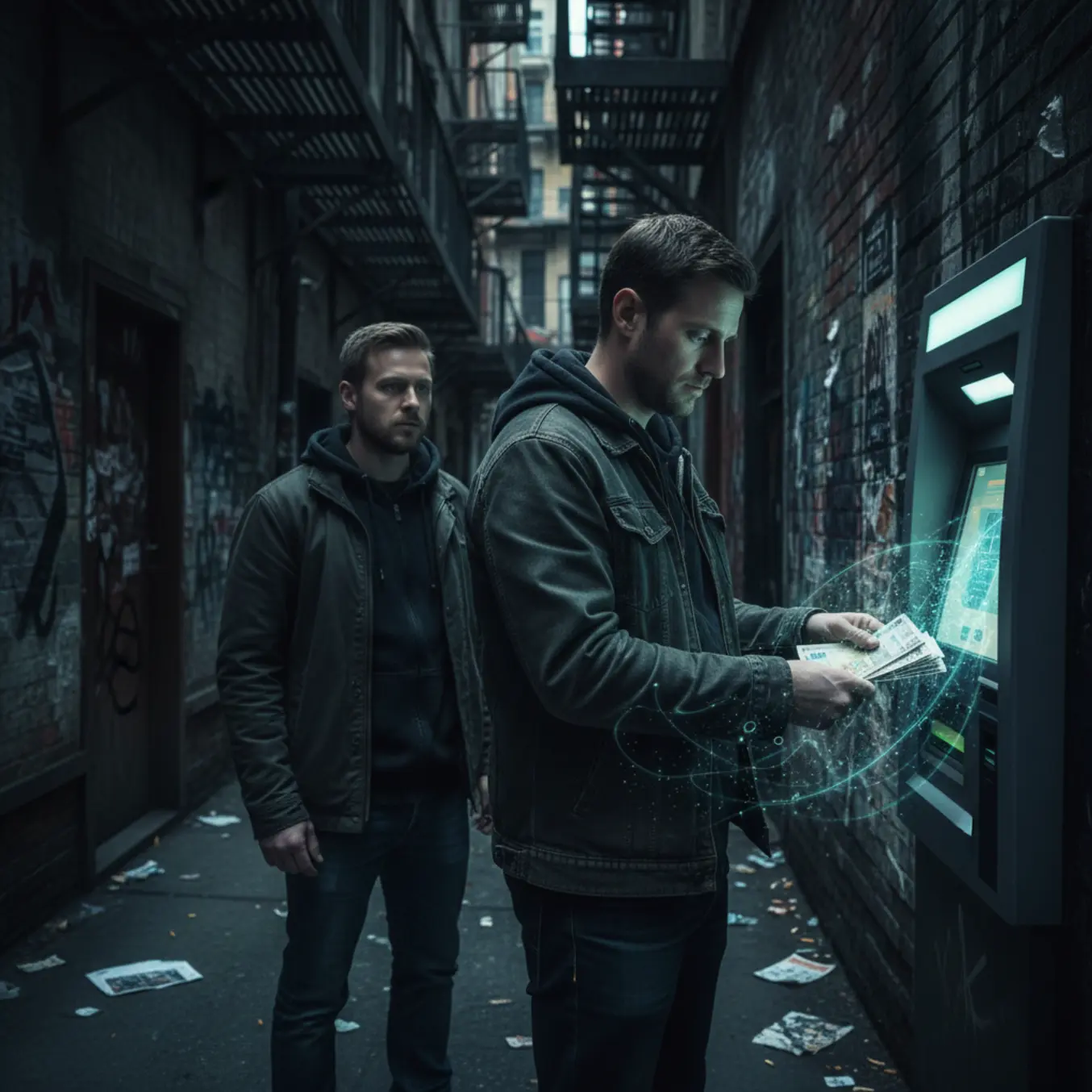
Traditional financial systems are built on a foundation of identity verification, often referred to as Know Your Customer (KYC) and Anti-Money Laundering (AML) regulations. Opening a bank account requires photo identification, proof of address, and other personal details. This makes it difficult for criminals to move money without leaving a trace. Crypto ATMs and payment vouchers, however, often operate in a grey area of regulation. Many crypto ATMs, especially for smaller transaction amounts, have minimal to no KYC requirements. A scammer can direct a victim to an ATM where they can purchase Bitcoin or another cryptocurrency with cash and send it directly to the scammer’s digital wallet using a QR code. The transaction is linked to a wallet address, not a person’s legal name and address, providing a significant layer of obfuscation.
Payment vouchers (like Paysafecard or Neosurf) offer an even greater degree of anonymity. These are essentially prepaid cards that can be purchased with cash at convenience stores, gas stations, or newsstands. The victim buys a voucher and is then instructed to send the 16-digit PIN to the scammer. Once the scammer has the code, they can redeem it instantly and anonymously, converting it into cash or using it to fund other online accounts. For the fraudster, this is the digital equivalent of being handed untraceable cash.
Irreversibility: The Point of No Return
This is arguably the most critical feature for scammers. Transactions made through traditional means like credit cards or certain bank transfers come with consumer protections. If you realize you’ve been scammed, you can contact your bank or credit card company to dispute the charge and initiate a chargeback. This process can often recover your funds.
Cryptocurrency and voucher transactions, by their very nature, are irreversible. Once a cryptocurrency transaction is broadcast to the network and confirmed on the blockchain, it is final and cannot be undone or reversed by any central authority. The decentralized nature of cryptocurrencies means there is no “customer service” to call to cancel the payment. Similarly, once a voucher PIN is redeemed by the scammer, the value is instantly transferred, and the original voucher becomes void. The funds are gone for good from the perspective of the voucher company.
Once the QR code is scanned and the crypto is sent, or the voucher PIN is revealed, your money has effectively vanished into the digital ether. There is no bank to call for a reversal, no dispute form to file. It is the digital equivalent of placing cash in an envelope and mailing it to an untraceable address.
The Scammer’s Playbook: Common Frauds Using Crypto ATMs and Vouchers
Fraudsters have developed a variety of sophisticated narratives designed to panic or entice victims into using these specific payment methods. They tailor their scripts to exploit human emotions like fear, love, greed, and trust. While the stories may vary, the end goal is always the same: coerce the victim into sending money through an anonymous and irreversible channel.
Impersonation Scams: The Threat of False Authority
This is one of the most widespread and effective types of fraud. Scammers will impersonate officials from government agencies (like the tax office, social security administration, or law enforcement), utility companies, or major tech corporations like Microsoft or Apple. They contact the victim with an urgent and frightening problem. For example, they might claim the victim owes back taxes and will be arrested if they don’t pay immediately. Or they might allege that the victim’s computer has been hacked and is being used for criminal activity, demanding a fee to “clean” the device. The key element is urgency. The scammer insists that the only way to avoid dire consequences is to pay immediately using a specific method: a nearby crypto ATM or by purchasing vouchers. They will often stay on the phone with the victim, guiding them step-by-step through the process to ensure they don’t have a moment to think clearly or speak to anyone else.
Romance and Investment Scams: Exploiting Trust and Greed
These are often long-term scams where the fraudster invests weeks or even months building a relationship with the victim. In romance scams, they create a fake online persona and cultivate a deep emotional connection. Once trust is established, a sudden “emergency” will arise—a medical bill, a travel problem, a failed business venture—requiring an urgent transfer of funds. The scammer will request payment via crypto or vouchers, claiming their bank accounts are frozen or they are in a location where they cannot access traditional banking.
Investment scams, often called “pig butchering,” follow a similar pattern of trust-building. The scammer poses as a successful investor and slowly introduces the victim to a “guaranteed” high-return investment opportunity in cryptocurrencies. They guide the victim to make an initial small investment through a crypto ATM to a seemingly legitimate trading platform. After showing impressive fake profits, they pressure the victim into investing larger and larger sums of money. When the victim eventually tries to withdraw their “earnings,” they find it’s impossible, and the scammer disappears.
The Psychology of Deception: How Fraudsters Manipulate Their Victims
The success of these scams doesn’t just rely on the technology; it hinges on the powerful psychological manipulation of the victim. Scammers are masters of social engineering, using tactics designed to bypass rational thought and trigger an emotional response.
Creating Urgency, Fear, and Isolation
The core of most impersonation scams is the creation of overwhelming pressure. By manufacturing a crisis with severe consequences—such as arrest, deportation, or the loss of all personal data—the scammer puts the victim into a state of panic. This “fight or flight” mode short-circuits logical thinking. The demand for immediate payment prevents the victim from taking a step back to verify the story. Furthermore, scammers will insist the victim stay on the phone with them throughout the entire process, from the initial call to the moment the transaction is complete. This isolation tactic is crucial, as it prevents the victim from consulting with a friend, family member, or bank official who would immediately recognize the scam.
They use sophisticated language, official-sounding titles, and sometimes even spoofed phone numbers to appear legitimate. This combination of authority, urgency, and isolation is a potent cocktail that can cause even savvy individuals to make irrational decisions.
Prevention and Protection: A Guide for Families
Protecting yourself and your loved ones requires vigilance and education. Open communication, especially with more vulnerable family members like the elderly, is the best defense.
- Recognize the Red Flags: Be immediately suspicious of any unsolicited call, text, or email that demands immediate payment. Government agencies and legitimate corporations will never demand payment via crypto ATM, gift cards, or payment vouchers.
- The Stop and Think Rule: If you receive a threatening or high-pressure demand for money, the single most important thing to do is to stop. Hang up the phone. Delete the email. Take a few deep breaths. A legitimate organization will not pressure you into an instant, irreversible payment.
- Verify Independently: Never use the contact information provided by the person who called you. If someone claims to be from your bank or a government agency, find the official phone number from their website or an official document and call them directly to verify the claim.
- Educate Your Family: Have open conversations about these specific scams. Explain that no one from the government will ever ask them to go to a crypto ATM. Discuss the irreversible nature of these payments. The more they know about the tactics, the less likely they are to fall for them. Understanding the world of digital currencies is a key part of modern financial literacy.
What to Do If You Have Been Scammed
Realizing you’ve been a victim of a scam is a devastating experience. It’s important to act quickly and understand that recovery is often possible, but it requires specialized expertise.
First, cease all contact with the scammer and do not send any more money, no matter what they promise or threaten. Preserve all evidence, including transaction IDs, wallet addresses, phone numbers, emails, and chat logs. Report the crime to your local law enforcement agency to create an official record.
However, due to the complexity of tracing blockchain transactions and navigating the global and unregulated nature of many crypto entities, police reports alone are often not enough to recover funds. This is where professional help becomes essential. Companies specializing in crypto asset recovery have the forensic tools, investigative techniques, and legal expertise to trace the flow of stolen funds and identify the perpetrators.
At Nexus Group, we understand the devastation of financial fraud. That’s why we offer a clear commitment to our clients: we guarantee the recovery of your funds, or you receive a full refund of our service fee. Our team of experts will meticulously analyze your case and deploy advanced strategies to track and reclaim your assets. If you have been a victim, do not lose hope. Take the first step towards justice and financial recovery.
