
The thrill of planning a vacation is a unique experience. It’s a time filled with anticipation, a period of dreaming about new sights, sounds, and experiences. From scrolling through idyllic photos of beachfront apartments to finding the perfect city-center hotel, the booking process is often the first step in a much-awaited journey. However, this excitement can quickly turn into a nightmare. In the digital age, where convenience is king, the travel industry has become a prime target for sophisticated scammers. These criminals exploit the trust and excitement of travelers, using deceptive tactics to steal hard-earned money and ruin meticulously planned trips. Fake hotel listings, cloned booking websites, and high-pressure payment tricks are just a few of the weapons in their arsenal.
The rise of online travel agencies and vacation rental platforms has revolutionized how we book accommodations, but it has also opened new doors for fraud. A traveler might think they’ve secured a beautiful villa for their family, only to arrive and find an empty lot or a private residence whose owners have never heard of them. Others might be duped by a mirror-image copy of a legitimate booking site, handing over their credit card details directly to criminals. Understanding the anatomy of these scams is the first line of defense. This guide will walk you through the most common travel booking scams, teach you how to identify the red flags, and provide a clear, step-by-step plan for what to do if you become a victim. Knowledge is power, and in the fight against travel fraud, being prepared can make all the difference between a dream vacation and a financial disaster.
Table of Contents:
- The Anatomy of a Modern Travel Booking Scam
- The Phantom Listing: Fake Hotels and Non-Existent Apartments
- The Clone Wars: Deceptive Websites and Phishing Traps
- The Pressure Tactic: Off-Platform Payments and Last-Minute Tricks
- Key Red Flags: Your Guide to Spotting a Scam Before It’s Too Late
- How to Scrutinize Listings and Reviews Like an Expert
- Verifying Communication and Protecting Your Data
- I’ve Been Scammed, What Now? A Step-by-Step Guide to Recovery
The Anatomy of a Modern Travel Booking Scam
To effectively protect yourself, you must first understand your enemy. Travel booking scams are not random acts of digital vandalism; they are carefully orchestrated schemes designed to manipulate human psychology and exploit technological vulnerabilities. Scammers invest significant time and resources into making their fraudulent operations appear legitimate, preying on the natural desire for a good deal and the trust we place in familiar online platforms. These scams generally fall into three primary categories, often used in combination to maximize their effectiveness: fake listings, cloned websites, and deceptive payment tactics.
The foundation of many scams is the creation of a compelling but entirely fictitious product. This could be a luxury apartment with stunning ocean views or a boutique hotel in a prime urban location. The scammers build a facade of authenticity around this non-existent property, knowing that an appealing offer can cause travelers to lower their guard. They then create pathways for victims to “book” this property, leading them away from secure environments and into their control. The ultimate goal is always the same: to secure a payment through a method that is difficult, if not impossible, to trace or reverse. By understanding the intricate details of each tactic, you can begin to see the cracks in their facade and protect yourself from falling into their trap.
The Phantom Listing: Fake Hotels and Non-Existent Apartments
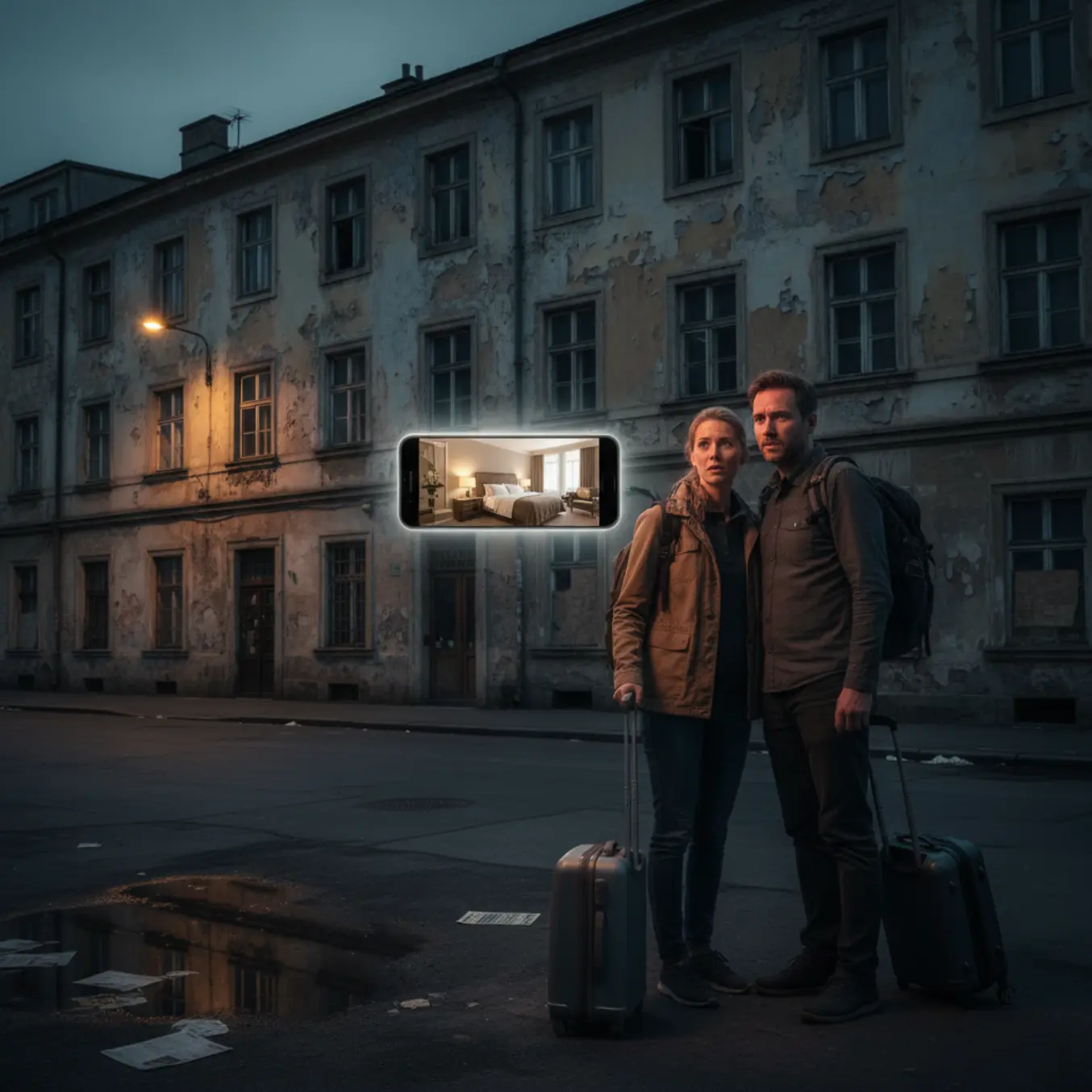
The most common and emotionally devastating travel scam is the phantom listing. Fraudsters create highly attractive listings for properties that either do not exist, are not actually available for rent, or are drastically different from what is advertised. They populate these listings with beautiful, often stolen, photographs sourced from real estate websites, interior design magazines, or even other legitimate rental listings. These images create a powerful illusion of a high-quality, desirable accommodation at a competitive price.
These fake listings can appear on major platforms like Airbnb, Booking.com, and Vrbo, as well as on social media marketplaces and standalone, fraudulent websites. On legitimate platforms, scammers may hijack dormant accounts or create new ones, building a thin veneer of credibility. Their primary objective is to engage with a potential victim and quickly move the conversation—and the payment—off the platform’s secure system. They might claim the platform’s messaging is faulty or offer a significant discount for communicating directly via email or a messaging app. This is a critical red flag, as it removes all protections and oversight the legitimate platform provides, leaving the traveler vulnerable and without recourse when the property turns out to be a fabrication.
The Clone Wars: Deceptive Websites and Phishing Traps
A more technically sophisticated scam involves the creation of “cloned” websites. Scammers build fraudulent websites that are pixel-perfect replicas of well-known, trusted travel booking sites. They may copy the logos, branding, layout, and functionality of sites like Expedia, Hotels.com, or major airline portals. The goal is to trick users into believing they are on the official site, prompting them to enter sensitive personal and financial information, such as names, addresses, passport numbers, and credit card details.
These fraudulent sites are often promoted through phishing emails, deceptive social media ads, or search engine ads that appear above the real results. The URL is the most significant giveaway, though it can be subtle. A scammer might use a slightly altered domain name, such as “Booking-Official.com” or “Expedia-Deals.net,” to fool inattentive users. Once you enter your payment details on a cloned site, the scammers not only have your money but also your full credit card information, which can be used for further fraudulent activities. These are sophisticated phishing and fake payments schemes designed to steal both your money and your identity, making them particularly dangerous.
The Pressure Tactic: Off-Platform Payments and Last-Minute Tricks
Whether the scam begins with a fake listing or a cloned website, the endgame is almost always centered on the payment method. Scammers will go to great lengths to push you into paying through an irreversible and untraceable channel. This is the lynchpin of their operation. They know that payments made through a credit card on a legitimate platform’s secure portal can often be disputed and reversed through a chargeback. To circumvent this, they insist on alternative methods.
Common tactics include requesting a bank transfer (wire transfer), payment through services like Zelle or Wise, or even using gift cards or cryptocurrency. They will create a sense of urgency to pressure you into complying. You might be told that another family is about to book the property and you must transfer the funds immediately to secure your dates. They may offer a tempting “last-minute discount” for paying directly, claiming it allows them to avoid platform fees. This sense of urgency is designed to make you act impulsively and ignore warning signs. Once money is sent via a direct bank transfer or a similar method, it is functionally gone, with very little chance of recovery through traditional banking channels.
Key Red Flags: Your Guide to Spotting a Scam Before It’s Too Late
Becoming adept at spotting travel scams requires a vigilant and skeptical mindset. While fraudsters are constantly refining their techniques, they often leave behind a trail of red flags. Learning to recognize these warning signs is the most effective way to protect your finances and your vacation plans. From deals that are too good to be true to unusual communication styles, the clues are there if you know what to look for. The key is to approach every online booking with a healthy dose of caution and to trust your instincts. If something feels off, it probably is.
The golden rule of online booking is simple: If a deal seems too good to be true, it almost certainly is. A luxury penthouse in a major city for the price of a budget motel should immediately trigger your skepticism. Scammers use unrealistically low prices as bait to lure in victims who are focused more on the deal than on the details.
Vigilance must extend beyond the price tag. It involves a thorough examination of the listing, the host’s profile, the website’s URL, and the nature of the communication. By adopting a methodical approach to verification, you can systematically dismantle a scammer’s attempts to deceive you. Let’s explore the specific areas where these red flags are most likely to appear.
How to Scrutinize Listings and Reviews Like an Expert
The listing itself is your first source of information and your first opportunity to detect fraud. Start with the photos. Perform a reverse image search (using tools like Google Images) on the property photos. If the same images appear on stock photo sites, in real estate listings for a different location, or on other travel websites under a different host, you are almost certainly looking at a scam.
Next, analyze the reviews. A complete lack of reviews for a property that claims to be popular is a major warning sign. Be equally wary of a flood of recent, generic, and overly positive reviews, especially if they are all written in a similar style. Scammers can use bots or fake accounts to post glowing but vague reviews like “Great stay!” or “Wonderful place!” Legitimate reviews often contain specific details about the property, the location, and the host. Also, examine the host’s profile. Is the account brand new? Does the host have other properties with a long and consistent history of positive, detailed reviews? A sparse or newly created profile is a cause for concern.
Verifying Communication and Protecting Your Data
Your interactions with the supposed host or booking agent are a critical part of the vetting process. One of the biggest and most non-negotiable red flags is any attempt to move the conversation off the official booking platform. Legitimate hosts and platforms want to keep all communication within their system for security and record-keeping. A scammer will immediately try to get your email address or phone number to communicate via WhatsApp, Telegram, or direct email. Their excuse might be that the platform’s messaging is unreliable or that they can offer a better deal directly. Do not fall for this. Once you are off-platform, you lose all protections and create a direct line for the scammer to pressure you.
Pay close attention to the language used. While not always a definitive sign, poor grammar, spelling mistakes, and an unprofessional tone can indicate a scam, particularly if the listing is for a high-end property. Furthermore, be cautious of any communication that creates an undue sense of urgency. High-pressure sales tactics are designed to rush you into making a poor decision. Finally, before entering any information on a website, double-check the URL. Ensure it starts with “https” (indicating a secure connection) and that the domain name is spelled correctly without extra words or hyphens. Recognizing the tell-tale signs of a fraudulent website is a crucial defense against many common phishing and fake payments attacks.
I’ve Been Scammed, What Now? A Step-by-Step Guide to Recovery
Discovering you’ve been the victim of a travel booking scam can be a deeply distressing experience, invoking feelings of anger, embarrassment, and panic. However, it is crucial to act quickly and methodically. The steps you take in the immediate aftermath can significantly impact your chances of recovering your lost funds. The first priority is damage control—stopping any further financial loss—followed by a systematic process of gathering evidence and reporting the crime. While the path to recovery can be challenging, especially when dealing with international criminals who are experts at covering their tracks, it is not always impossible. Taking the right actions provides law enforcement, financial institutions, and professional recovery services with the best possible chance to help you.
The first step is to accept that you have been a victim of a crime and not to blame yourself. These scams are designed by professionals to be convincing. Your focus must now shift to a proactive and organized response. Create a dedicated file or folder to store all related documents and correspondence. This will be your case file, an essential tool for every report you make and every conversation you have regarding the incident. Remember, time is of the essence. The faster you act, the better your odds of a positive outcome.
If you find yourself in this unfortunate situation, here is a clear plan of action:
- Contact Your Financial Institution Immediately: If you paid by credit card, call your card provider’s fraud department right away. Explain the situation and request a chargeback. Credit cards offer the best consumer protections, and a chargeback can often reverse the transaction. If you paid via a debit card or bank transfer, contact your bank’s fraud department. While direct transfers are harder to reverse, reporting the fraud immediately is essential. They may be able to freeze the recipient’s account if it is still active.
- Gather All Evidence: This is a critical step. Do not delete anything. Compile a complete record of the entire incident, including:
- Screenshots of the fake listing, the fraudulent website, and the host’s profile.
- Copies of every single message exchanged, whether on a booking platform, email, text, or messaging app.
- All payment records, including transaction confirmation emails, bank statements showing the debit, and any wire transfer receipts.
- The URL of the fraudulent website and any email addresses or phone numbers used by the scammer.
- Report the Fraud to All Relevant Parties:
- If the scam originated on a platform like Airbnb or Booking.com, report the fraudulent listing and user to their trust and safety team immediately. This can help get the listing removed and prevent others from being scammed.
- File a report with your local police department. While they may have limited jurisdiction, an official police report is often required by banks and other institutions as proof of the crime.
- Report the incident to national fraud reporting centers, such as the Federal Trade Commission (FTC) in the United States or Action Fraud in the UK.
Navigating the complex procedures of banks and international law enforcement can be overwhelming for an individual. Scammers are adept at moving money through multiple accounts and jurisdictions, making recovery a specialized task. This is where professional assistance can be invaluable. At Nexus Group, we specialize in asset recovery for victims of online fraud, including complex financial scams like phishing and fake payments. Our team of experts understands the intricate pathways of digital finance and has experience working with financial institutions worldwide to trace and retrieve stolen funds. We handle the burden of the recovery process, allowing you to focus on moving forward. Our commitment to our clients is backed by a performance-based guarantee: we successfully recover your funds, or you receive a full refund of our fees. This ensures that we are fully invested in achieving a successful outcome for you. Don’t let scammers have the final word. If you have lost money to a travel booking scam, take action.
If you have been a victim of a travel booking scam and need expert assistance to recover your funds, do not hesitate to reach out. We are here to help you fight back and reclaim what is rightfully yours.
