
The global shift to remote work has been a game-changer, offering unprecedented flexibility and access to a wider talent pool. For small companies, this transition has opened up new avenues for growth and efficiency. However, it has also expanded the attack surface for cybercriminals, turning once-secure internal processes into potential vulnerabilities. When your team is distributed, a simple action like approving a payment or granting access to a shared drive can become a high-stakes security event. The casual, in-person “Can you approve this invoice?” is replaced by digital communications that can be intercepted, spoofed, and exploited.
Small businesses often operate under the dangerous assumption that they are too insignificant to be targeted. The reality is the opposite: they are prime targets precisely because they may lack the robust security infrastructure of larger corporations. A single compromised email account or a moment of employee error can lead to devastating financial loss and reputational damage. This article is designed for the leaders and teams of small companies navigating the complexities of remote work. We will provide practical, actionable procedures to fortify your operations, focusing specifically on two of the most critical areas: approving payments and managing access rights. By implementing these strategies, you can significantly reduce your risk and build a resilient, secure remote work environment.
Spis treści:
- Understanding the Remote Work Threat Landscape for Small Businesses
- Fortifying Your Financial Fortress: A Bulletproof Payment Approval Process
- The Principle of Least Privilege: Mastering Access Rights Management
- Reducing Human Error: Training and Technology
- Partnering for Protection: The Nexus Group Advantage
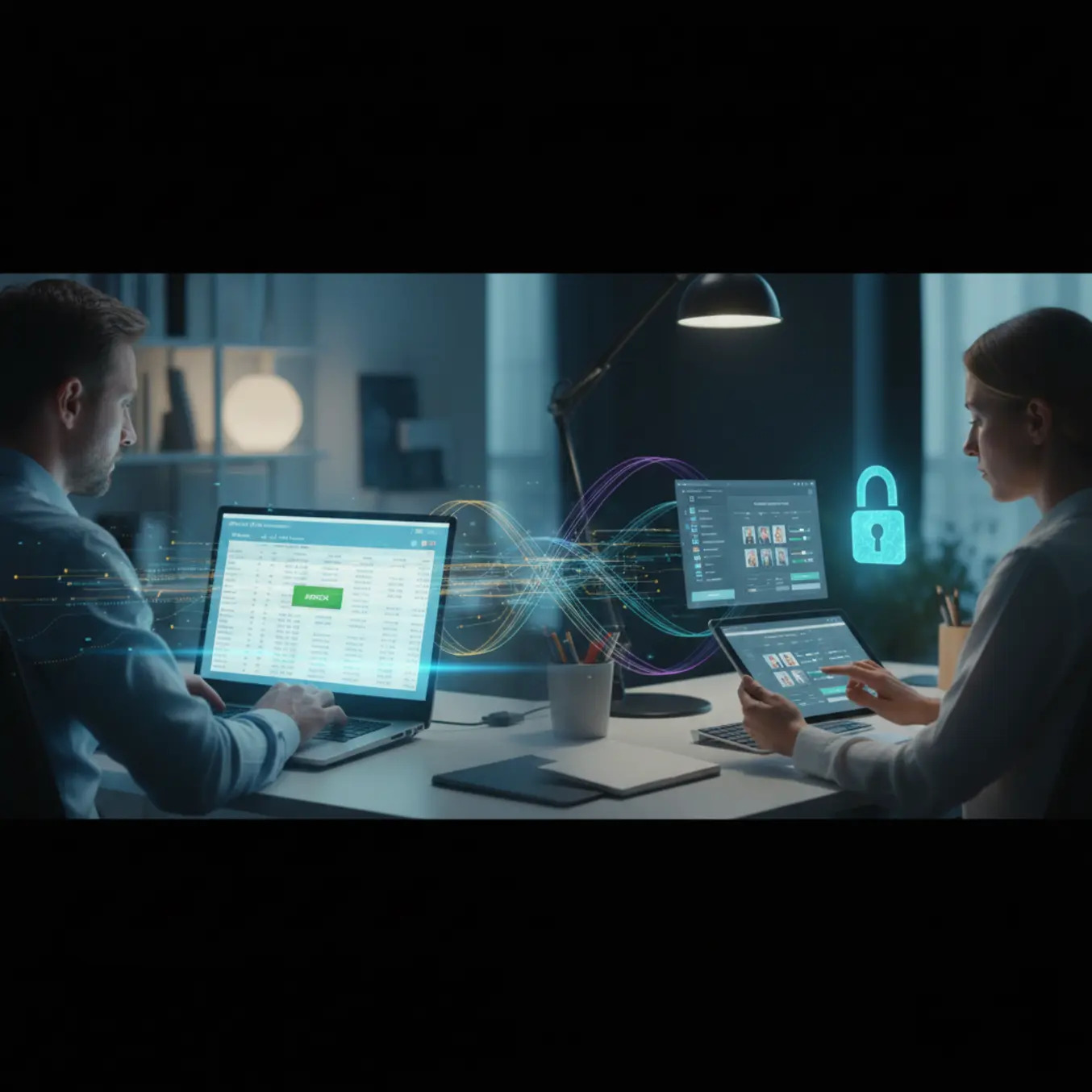
Understanding the Remote Work Threat Landscape for Small Businesses
The convenience of remote work is undeniable, but it comes with a set of inherent risks that every small business must acknowledge and address. When employees operate from various locations, using different networks and often personal devices, the traditional concept of a secure office perimeter dissolves. This distributed environment creates numerous entry points for malicious actors who are constantly evolving their tactics to exploit these new weaknesses. Understanding these specific threats is the first step toward building an effective defense.
Why Small Companies Are a Primary Target
Cybercriminals are opportunistic; they follow the path of least resistance. While a large corporation might offer a bigger potential payout, it is also defended by teams of security experts and multi-million dollar security systems. Small businesses, on the other hand, are often seen as “soft targets.” They possess valuable assets, including client data, financial information, and intellectual property, but frequently lack a dedicated IT security budget or personnel. Attackers know that a small team is likely juggling multiple responsibilities, making them more susceptible to social engineering and less likely to have implemented advanced security protocols. A successful attack on a small company can be just as profitable and requires significantly less effort.
Common Attack Vectors in a Remote Setting
In a distributed workforce, threats often manifest in subtle ways, preying on human trust and the routines of daily business communication. The most prevalent attacks include:
- Business Email Compromise (BEC): This is one of the most financially damaging scams. An attacker gains access to a company email account (often a manager or executive) or spoofs the address to make it look legitimate. They then send fraudulent payment instructions to an employee in finance, redirecting large sums of money to an account they control.
- Phishing and Spear Phishing: Phishing involves sending deceptive emails to a broad audience, hoping someone will click a malicious link or open a compromised attachment. Spear phishing is a more targeted version where the attacker researches the victim to make the email more personal and believable, perhaps referencing a recent project or a colleague’s name.
- Ransomware: An employee might inadvertently download ransomware through a phishing link or a compromised website. This malware encrypts the company’s files, rendering them inaccessible until a ransom is paid. For a small business, this can halt operations completely.
- Insecure Network Connections: Employees working from home, cafes, or airports may use unsecured public Wi-Fi networks. This makes it easier for attackers to intercept data transmitted between the employee’s device and company servers, a technique known as a “man-in-the-middle” attack.
Addressing these threats requires more than just antivirus software. It demands a holistic approach that combines technology, well-defined processes, and continuous employee education. A robust security posture is not a luxury; it is a fundamental requirement for survival in the modern business landscape.
Fortifying Your Financial Fortress: A Bulletproof Payment Approval Process
For any business, the flow of money is its lifeblood. Unfortunately, it is also the primary target for cybercriminals. A single fraudulent transaction can be crippling for a small company. The informal processes that might have worked in an office, where you could walk over to a colleague’s desk for verification, are dangerously inadequate in a remote setup. Implementing a strict, multi-layered payment approval process is non-negotiable.
The Flaw of Single-Channel Approvals
The most common mistake small businesses make is relying exclusively on email for payment requests and approvals. Imagine this scenario: your finance person receives an email that appears to be from you, the CEO, urgently requesting an immediate wire transfer to a new vendor to close a critical deal. The email signature is correct, the tone is familiar, but the bank details are the attacker’s. Under pressure, the employee processes the payment. By the time the fraud is discovered, the money is long gone. This is a classic BEC attack, and it succeeds because the entire process took place within a single, compromised channel: email.
Never trust, always verify. A five-minute verification call can prevent a five-figure loss. In the world of remote work security, a healthy dose of skepticism is your greatest asset. Rushing a payment is a far smaller risk than sending it to the wrong recipient.
Implementing a Multi-Channel Verification Protocol
The core principle of a secure payment process is out-of-band verification. This means that any request received through one channel must be confirmed through a separate, independent channel before any action is taken. Here is a practical, step-by-step procedure for a small team:
- Step 1: The Initial Request. An invoice or payment request is received, typically via email. This is the starting point, but it should never be the only point of communication.
- Step 2: The Mandatory Verification. Before any payment is prepared, the employee responsible must verify the request’s legitimacy through a different medium. This is the crucial step. The verification method should be pre-established and known to the team. Options include:
- A voice call to a known and trusted phone number of the requestor.
- A message in a secure, dedicated company chat application like Slack or Microsoft Teams.
- A video call for particularly large or unusual payments.
Text messages or WhatsApp can be used, but a voice call is often the most secure method as it confirms the person’s identity more definitively.
- Step 3: Dual Authorization for High-Value Payments. For any payments exceeding a certain threshold (e.g., $1,000), require approval from two separate individuals. Person A prepares the payment, and Person B provides the final authorization after independently verifying the request. This system of checks and balances makes it significantly harder for a single point of failure to result in a loss.
- Step 4: Scrutinize Changes. Be extremely cautious of any request to change vendor payment information. If a known supplier suddenly provides new bank account details, this is a major red flag. Always confirm this change via a phone or video call using a previously established contact number, not one listed in the suspicious email.
By ingraining this multi-channel verification protocol into your company culture, you create a powerful defense against some of the most common forms of financial fraud. It transforms your payment process from a vulnerability into a strength, protecting your assets and ensuring peace of mind. Investing in this procedural security is one of the highest-return activities a small business can undertake.
The Principle of Least Privilege: Mastering Access Rights Management
In a small, close-knit team, it can be tempting to grant everyone broad access to files, systems, and applications for the sake of convenience. However, this approach creates significant security risks. Every employee with excessive permissions is a potential gateway for an attacker. If their account is compromised, the attacker gains access to everything that employee could, allowing them to move laterally through your network, steal sensitive data, and cause widespread damage. The solution is the Principle of Least Privilege (PoLP), a foundational concept in cybersecurity.
Defining Role-Based Access Control (RBAC)
The Principle of Least Privilege is simple: a user should only have access to the specific data and resources necessary to perform their job, and nothing more. Role-Based Access Control (RBAC) is the practical implementation of this principle. Instead of assigning permissions to individuals one by one, you create roles (e.g., “Sales,” “Marketing,” “Finance,” “Admin”) and assign a specific set of permissions to each role. When a new employee joins, you simply assign them the appropriate role, and they automatically inherit the correct access rights.
For a small company, this might look like:
- Sales Role: Access to the CRM, sales pipeline documents, and marketing materials. No access to financial records or HR files.
- Finance Role: Access to accounting software, bank portals, and payroll information. Limited access to the CRM.
- Admin Role: Broader access to manage users and systems, but still restricted from viewing sensitive financial or client data unless explicitly required for their duties.
This structure not only enhances security but also simplifies administration. When an employee’s role changes or they leave the company, you can update or revoke their access in one central place rather than hunting down permissions across dozens of applications.
A critical component of access control is Multi-Factor Authentication (MFA). MFA requires users to provide two or more verification factors to gain access to a resource, such as a password (something you know) and a code from an app on your phone (something you have). Implementing MFA should be mandatory for all critical systems, including email, cloud storage, financial platforms, and administrative accounts. It acts as a powerful barrier, preventing unauthorized access even if an employee’s password is stolen.
At Nexus Group, we understand that recovering from a security breach is a complex and stressful process. That is why we stand by our expertise and our methods. For our clients who follow our recovery protocols, we provide a guarantee of fund recovery or your money back, offering a crucial safety net in the event of a financial cyber incident.
Regularly auditing who has access to what is just as important as setting up the initial permissions. At least once a quarter, you should review all user accounts and their access levels. Are there former employees who still have active accounts? Does someone who moved from sales to marketing still have full access to the CRM’s export function? These periodic reviews help close security gaps that can develop over time. A proactive approach to managing access is a cornerstone of a mature security program, preventing breaches before they can occur.
By combining a strict, role-based access model with mandatory MFA and regular audits, you drastically reduce your internal attack surface. You contain the potential damage from any single compromised account and build a more resilient and defensible organization, ready to thrive in the remote work era.
Protecting your small business in a remote environment requires diligence and the right expertise. If you have been the victim of a scam or want to proactively secure your operations, we are here to help. Contact us
