
In the rapidly evolving world of digital assets, convenience is a key driver of adoption. QR codes have emerged as a powerful tool, simplifying complex processes like sharing wallet addresses, connecting to decentralized applications (dApps), and making payments. With a simple scan from a mobile device, users can bypass the cumbersome task of copying and pasting long, alphanumeric strings. However, this same convenience has been weaponized by malicious actors, giving rise to a sophisticated and dangerous threat: the QR code wallet drainer. What appears to be a harmless scan can, in reality, be a cleverly disguised request for a signature that grants a scammer complete control over your funds. This article will delve into the mechanics of these scams, explain how QR codes are used to initiate malicious connections and approvals, and provide a detailed guide on what every crypto user must inspect before signing any transaction on their mobile wallet.
Spis treści:
- Understanding the Mechanism: From a Simple Scan to a Malicious Signature
- Common QR Code Scams and How They Are Deployed
- Your Mobile Wallet: The Anatomy of a Signature Request
- Proactive Steps for Comprehensive Wallet Security
- What to Do If You Suspect You Are a Victim
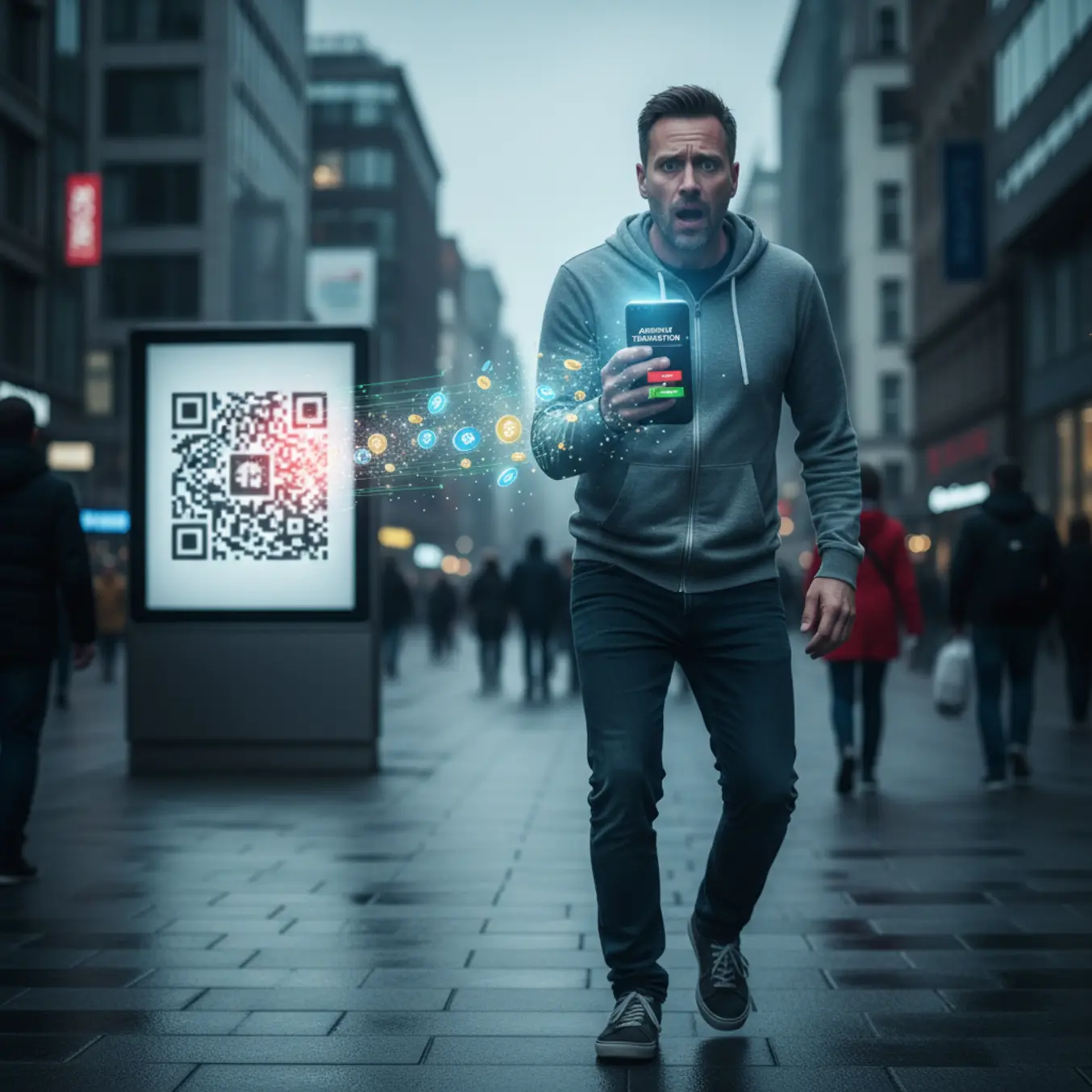
Understanding the Mechanism: From a Simple Scan to a Malicious Signature
To protect yourself, it is crucial to understand that a QR code itself is not malicious. It is merely a container for data, most often a URL or a piece of text. The danger lies in where that data directs you and what it asks you to do. In the context of wallet drainers, the QR code is the first step in a carefully orchestrated social engineering attack.
The Lure and the Link
Scammers begin by creating a compelling reason for you to scan their QR code. This is often done through promises of free money or exclusive access. Common lures include:
- Fake airdrops for a new or popular token.
- Exclusive minting opportunities for a “hyped” NFT project.
- Invitations to join a private sale or a high-yield staking pool.
- Bogus “security updates” or “wallet synchronization” requests from impersonators posing as support staff.
The QR code, when scanned, typically uses a protocol like WalletConnect to initiate a connection between your mobile wallet and a malicious dApp. This dApp is often a pixel-perfect clone of a legitimate website, such as Uniswap, OpenSea, or the project it purports to represent. The familiar design is intended to lower your guard and make you feel secure.
The Deceptive Signature Request
Once your wallet is connected to the scammer’s site, the trap is set. The “Claim Airdrop,” “Mint NFT,” or “Approve” button on the site does not trigger a simple, one-time transaction. Instead, it prompts your mobile wallet to ask for a signature for a much more powerful and dangerous permission. Scammers prey on the user’s haste and lack of technical knowledge to get them to approve these requests without proper scrutiny. The most common malicious functions they use are `setApprovalForAll` and `eth_sign`.
- setApprovalForAll: This is one of the most destructive functions when misused. In the context of NFTs (ERC-721 and ERC-1155 tokens), signing a `setApprovalForAll` transaction is like giving a third-party contract (the scammer’s) a master key to your entire collection of those specific NFTs. They can then transfer any or all of your NFTs from that collection out of your wallet at any time, without needing further permission from you.
- permit: For ERC-20 tokens (like USDT, USDC, or ETH), a `permit` or `approve` function can be used. A malicious approval can grant the scammer’s contract the permission to spend up to a specified amount of your tokens. Scammers will often request approval for the maximum possible value, effectively giving them access to your entire balance of that token.
- eth_sign: This is a more general-purpose and highly dangerous signature request. It allows the signing of arbitrary data. While it has legitimate uses, scammers have engineered ways to use a signature from `eth_sign` to authorize transactions on the user’s behalf. Many modern wallets display stark warnings for this type of request because it provides such broad and exploitable permissions.
The core of the deception is that the user believes they are authorizing a single, simple action (like receiving a free token), when in reality, they are signing away blanket permissions to their assets. The complexity of the blockchain space often leaves users vulnerable, but understanding these risks is the first step towards securing your cryptocurrencies.
Common QR Code Scams and How They Are Deployed
Wallet drainer scams are not random; they are targeted campaigns deployed across platforms where crypto users congregate. Awareness of their common forms can help you identify them before you make a costly mistake.
Social Media and Community Impersonation
Platforms like X (formerly Twitter), Discord, and Telegram are hotspots for these scams. Scammers will hack verified or high-follower accounts to post a seemingly legitimate announcement about a surprise airdrop or mint. The post will contain a link to the malicious site and a QR code for mobile users, creating a sense of urgency with phrases like “First 10,000 users only!” or “Claim ends in 1 hour!”.
In Discord and Telegram, scammers will often impersonate project administrators or support staff. If you ask for help in a public channel, you may receive a direct message from an “admin” offering assistance. Their solution will inevitably involve “verifying” or “resyncing” your wallet by scanning a QR code they provide. This is a classic social engineering tactic designed to exploit a user in a moment of vulnerability.
Phishing Emails and Fake Advertisements
Another common vector is phishing emails designed to look like they are from a major exchange or wallet provider like Coinbase, Binance, or MetaMask. These emails might warn of an “unauthorized login attempt” or promote a “new security feature” that requires you to connect your wallet to verify your identity. The email will contain a button or a QR code leading to the malicious dApp. Similarly, scammers purchase ad space on search engines and social media, creating ads that appear at the top of search results and lead to fraudulent sites. A user searching for a legitimate dApp might click the top ad link, land on the fake site, and be prompted to connect via a QR code.
Your Mobile Wallet: The Anatomy of a Signature Request
Your mobile wallet is your last and most important line of defense. When a dApp requests a signature, your wallet will display a pop-up window with details of the proposed transaction. Rushing through this screen is how most people lose their funds. You must train yourself to slow down and meticulously inspect every detail before tapping “Approve” or “Sign.”
In the world of crypto, a signature is not an autograph; it is a legally binding command. Treat every signature request with the gravity of signing a blank check.
What to Inspect Before You Sign
Here is a checklist of what to scrutinize on the signature request screen:
- The Originating URL: The wallet should display the URL of the dApp requesting the signature. Is it the correct, official domain? Look for subtle misspellings (e.g., `uniswap.org` vs. `unlswap.org`) or different domain extensions (e.g., `.com` vs. `.io` vs. `.xyz`). If there is any doubt, close the request and manually type the official URL into your browser.
- The Function Name and Details: The wallet will show the function that the dApp is asking to execute. Be extremely wary of any request that includes `Set Approval For All`, `Permit`, or a generic `Sign` or `Confirm` message. A legitimate airdrop claim should be a `claim` function, not one that asks for broad permissions. If the wallet provides a data tab, look at the details. Does it look like you are giving permissions rather than receiving assets?
- The Assets at Risk: Modern wallets are getting better at clearly stating what is at stake. The request might explicitly say, “Give permission to access all your NFTs in the [Collection Name] collection” or “Give permission to spend your USDC.” If the request is asking for access to assets that are unrelated to the action you are trying to perform, it is a giant red flag. Why would claiming a new token require permission to spend your existing ones?
- The Gas Fee: A common trick is to present a transaction that has a zero or very low gas fee. This lulls the user into a false sense of security, making them think it’s a harmless, free action. The immediate cost is irrelevant; the real cost is the value of the assets you are giving the scammer permission to steal. Do not let a low gas fee influence your decision. The risk associated with losing one’s entire portfolio of cryptocurrencies is far too high.
- The Interacting Contract Address: Most wallets will show the address of the smart contract you are interacting with. You can copy this address and paste it into a block explorer like Etherscan (for Ethereum) or BscScan (for Binance Smart Chain). A legitimate contract will have a long history of transactions, a verified source code, and often a public label identifying it. A scammer’s contract will likely be very new, have few transactions, and no verification.
If anything on this screen seems confusing, unclear, or suspicious, the only safe action is to hit “Reject.” It is always better to miss out on a potential opportunity than to lose all of your funds. The challenges in safeguarding digital assets are significant, but knowledge and caution are your best tools. For those who have already suffered a loss, professional help is available to navigate the complex process of asset recovery for cryptocurrencies.
Proactive Steps for Comprehensive Wallet Security
Beyond scrutinizing individual transactions, you should adopt a broader security posture to protect your assets.
- Use a Burner Wallet: For interacting with new, unaudited dApps, airdrops, or mints, use a “burner” wallet. This is a separate wallet that you fund with only the exact amount of crypto needed for the transaction. If the dApp turns out to be malicious, the scammers can only drain this small amount, leaving your main holdings untouched.
- Regularly Revoke Permissions: Over time, you may grant approvals to many different dApps. Some of these may become compromised later. Periodically use a tool like Revoke.cash or the approval checker on Etherscan to review and revoke active permissions that you no longer need. This is like changing the locks on your house.
- Bookmark Official Sites: Never reach a dApp through a link on social media, a direct message, or a search engine ad. Find the official website, verify it, and bookmark it in your browser. Only ever access the site through your bookmark to ensure you are not on a phishing clone.
- Use a Hardware Wallet: For significant holdings, a hardware wallet (like a Ledger or Trezor) provides an extra layer of security. Transactions must be physically confirmed on the device, making it much harder for a remote attacker to drain your funds, even if your computer or phone is compromised.
What to Do If You Suspect You Are a Victim
If you realize you have signed a malicious transaction, time is of the essence. You must act immediately to mitigate the damage. The first step is to go to a token approval checker and revoke the malicious permissions you granted. If funds are already being drained, your best course of action is to attempt to transfer any remaining assets to a brand new, secure wallet that has never interacted with the malicious contract.
The aftermath of a crypto scam can be devastating, leaving victims feeling helpless. However, recovery is not always impossible. This is where specialized firms like Nexus Group can provide critical assistance. Our team of blockchain investigators and recovery experts can trace the flow of stolen funds and employ advanced strategies to retrieve them. We understand the intricacies of these scams and work relentlessly on behalf of our clients. If you have been the victim of a QR code wallet drainer or any other form of crypto theft, do not despair. At Nexus Group, we are so confident in our methods that we offer a guarantee: we either recover your funds, or you receive a full refund on our services. This is our commitment to providing real, risk-free solutions for victims. The world of digital finance is fraught with risk, and the recovery of stolen cryptocurrencies requires expert intervention.
QR codes have streamlined many aspects of the crypto experience, but they have also opened a new front for scammers. By understanding their methods, meticulously inspecting every signature request, and practicing good wallet hygiene, you can harness the convenience of this technology without falling prey to its dangers. Always remember the golden rule: if it seems too good to be true, it almost certainly is. Stay skeptical, stay vigilant, and protect your assets.
If you need assistance with asset recovery or want to learn more about protecting your digital wealth, please do not hesitate to reach out to our team of experts. Contact us
