
The rise of online marketplaces like Vinted, Facebook Marketplace, OLX, and others has revolutionized how we buy and sell goods. This peer-to-peer commerce offers unparalleled convenience, allowing us to declutter our homes and find unique items at great prices. However, this convenience has a dark side. Scammers have infiltrated these platforms, exploiting the trust inherent in these transactions with a sophisticated and alarmingly effective method: fake courier and payment links. Both sellers, eager to complete a sale, and buyers, hunting for a bargain, are falling victim, leading to significant financial losses and emotional distress. This scam preys on a lack of technical knowledge and a surplus of trust, turning an exciting transaction into a nightmare.
Understanding the mechanics of this fraud is the first and most critical step toward protecting yourself. It is not about being paranoid but about being prepared. Scammers create highly convincing replicas of legitimate websites for courier services, payment gateways, and even the marketplaces themselves. They use social engineering tactics to rush you, to make you feel like you are following a standard procedure, and to lower your guard just long enough to capture your most sensitive financial information. This guide will provide a comprehensive breakdown of how these scams work for both sellers and buyers, detail the red flags you must watch for, and outline the crucial steps to take if you have already fallen victim. By arming yourself with knowledge, you can navigate the world of online marketplaces safely and confidently.
Spis treści:
- The Anatomy of a Marketplace Scam: How It Unfolds
- The Psychology Behind the Trap: Why These Scams Are So Effective
- Deconstructing the Deception: Hallmarks of a Fake Link and Phishing Page
- Proactive Defense: How to Verify Transactions and Stay Safe
- Damage Control: What to Do After Entering Your Details on a Fake Page
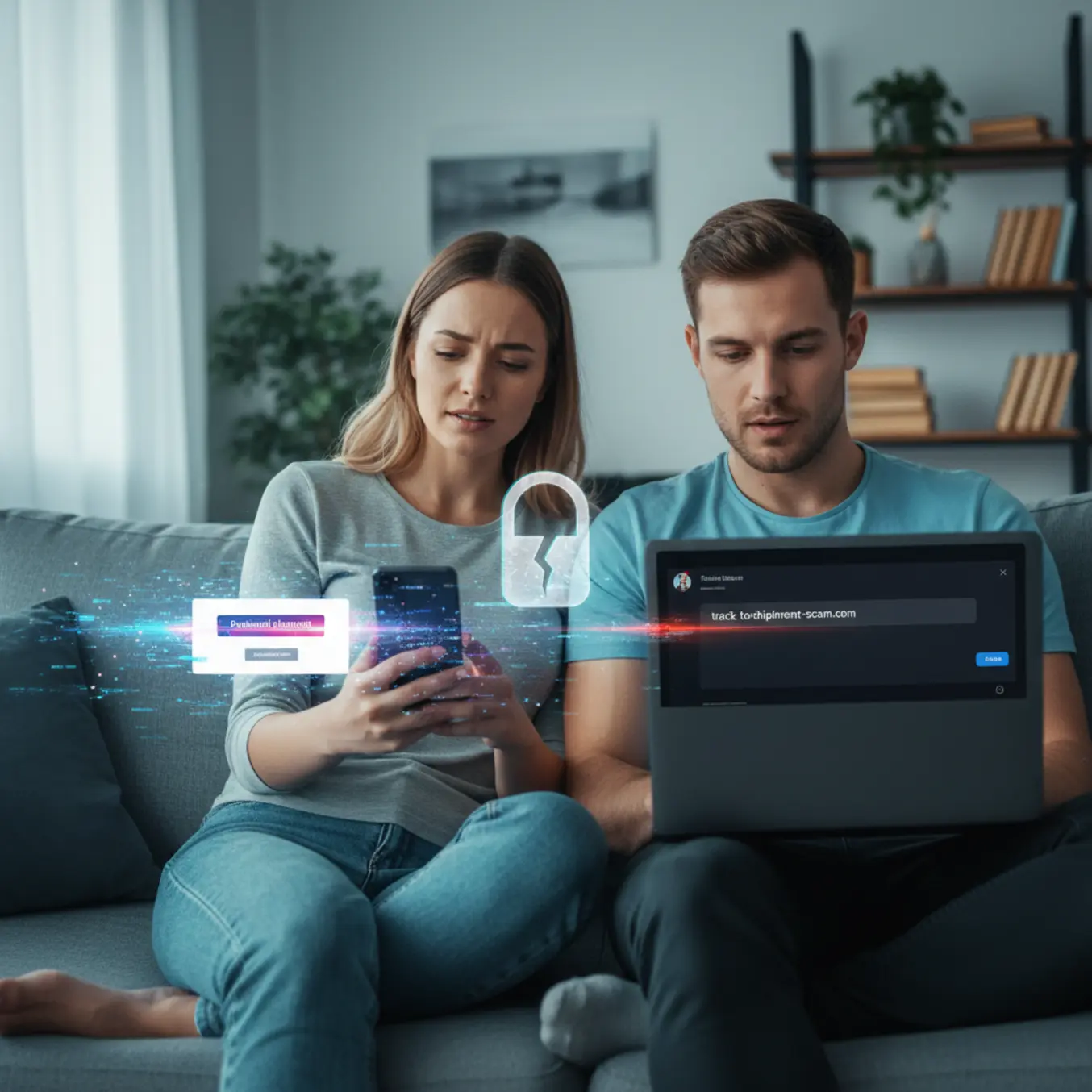
The Anatomy of a Marketplace Scam: How It Unfolds
The fake courier link scam is a masterclass in social engineering and digital forgery. It is effective because it mimics a legitimate process and leverages trusted brand names like DHL, FedEx, or InPost. The scam has two primary variants, one targeting the seller and the other targeting the buyer, but both end with the victim’s financial details in the hands of a criminal.
The Seller’s Trap: “Receiving” a Fake Payment
This is the most common form of the scam. The process for the seller typically follows a predictable pattern. First, the seller lists an item for sale on a platform. Almost immediately, sometimes within minutes, a “buyer” makes contact. This speed is a tactic designed to catch the seller while they are still actively engaged and eager to make the sale. The scammer’s first move is to steer the conversation away from the marketplace’s official messaging system. They will often say something like, “My app notifications don’t work well, can we switch to WhatsApp or Telegram?” This is a critical red flag. By moving off-platform, the scammer removes themselves from the marketplace’s security monitoring and eliminates any record of their fraudulent activity that the platform could use to warn others or assist in an investigation.
Once on a private messaging app, the scammer will quickly agree to the price and claim to have made the payment. They will then send a link. They will explain that this link is from the courier service (e.g., “DHL Secure Delivery”) or the marketplace’s own “escrow service.” The seller is told they need to click this link to accept the payment and provide their shipping details. The link leads to a professionally designed, yet completely fake, website. This phishing page will ask the seller to enter their debit or credit card details—including the full card number, expiry date, and CVV code—under the guise of “verifying the card” to receive the funds. In some more aggressive versions of the scam, the page may even ask for the seller’s online banking login credentials or their current account balance. Any information entered here goes directly to the scammer, who can then drain the victim’s bank account or use their card for fraudulent purchases.
The Buyer’s Trap: Paying for a Non-Existent Item
While sellers are the most frequent targets, buyers are also at risk, especially when an item is listed at a price that seems too good to be true. In this scenario, the scammer poses as a seller. They list a high-demand item, such as a gaming console, a designer handbag, or a popular electronic device, at a heavily discounted price to attract a lot of interest quickly.
When a potential buyer expresses interest, the fraudulent seller will use a similar tactic of moving the conversation off-platform. They will then refuse to use the marketplace’s official payment system, providing an excuse such as high fees or a previous bad experience. Instead, they will insist on using a “secure third-party escrow service” or a “direct courier payment-on-delivery” system and provide a link. The link, just as in the seller’s scam, leads to a meticulously crafted phishing page. This page will prompt the buyer to enter their payment details to purchase the item. Once the buyer enters their card information and authorizes the payment, the money is sent directly to the scammer. The buyer receives a fake confirmation, but the item, of course, never existed and will never be shipped. The “seller” then deletes their account and disappears, leaving the buyer with no product and no recourse through the official platform.
The Psychology Behind the Trap: Why These Scams Are So Effective
The success of these scams is not just based on technical deception; it is deeply rooted in human psychology. Scammers are experts at manipulating emotions and cognitive biases to their advantage.
The core of the marketplace scam relies on a potent combination of urgency, trust in familiar brands, and the target’s own desire for a smooth and successful transaction. Scammers weaponize our natural instincts against us.
One of the primary tools is the creation of a false sense of urgency. When a seller receives a quick offer, they feel a sense of excitement and a desire to close the deal before the “buyer” changes their mind. Scammers will often say things like, “I need to buy this today for a gift” or “Please complete the process quickly so the courier can be dispatched.” This pressure causes the victim to rush, skipping the careful checks they might normally perform. They are focused on the outcome—the sale—and not the process.
Furthermore, these scams exploit misplaced trust. By using the logos and design schemes of well-known companies like DPD, UPS, or even the marketplace itself, they create an illusion of legitimacy. A person may be wary of a random link, but a link that appears to be from a trusted courier service feels safe. The victim believes they are interacting with a legitimate corporate entity, not a criminal. This is compounded by confirmation bias; the seller or buyer wants the transaction to be real, so they are more likely to interpret ambiguous signals (like an odd-looking URL) as benign. For more information on how these fraudulent payment systems are engineered, you can explore our detailed guide on phishing and fake payments.
Deconstructing the Deception: Hallmarks of a Fake Link and Phishing Page
While scammers are skilled at creating convincing fakes, their creations are never perfect. There are always tell-tale signs of fraud if you know what to look for. Protecting yourself requires a vigilant and methodical approach to examining every step of a transaction that deviates from the platform’s standard procedure.
Communication Red Flags
The scam often begins before you even see a link. The way the other party communicates can be your first and best warning sign. Be highly suspicious if you encounter the following:
- The Rush to Go Off-Platform: As mentioned, this is the number one red flag. A legitimate user has no reason to immediately move the conversation to WhatsApp, Telegram, or email. The platform’s messaging service is there to protect both parties.
- Sense of Urgency and Pressure: Scammers will push you to act now. They create artificial deadlines to prevent you from thinking critically or consulting with others.
- Poor Grammar and Unnatural Phrasing: Many of these scams originate from international crime groups. While some are sophisticated, many of the initial contact messages contain grammatical errors, spelling mistakes, or phrasing that a native speaker would not use.
- Refusal to Use Official Channels: A buyer who refuses to use the “Buy Now” button or a seller who refuses to accept payment through the platform’s integrated system is almost certainly a scammer. They will invent excuses, but the real reason is that they cannot subvert the platform’s built-in security.
Analyzing the URL: The Digital Fingerprint
The link itself is the most critical piece of evidence. Before you ever click, and especially before you enter any information, you must dissect the URL. Scammers rely on you only glancing at it.
- Domain Name Deception: This is the most common trick. The URL might look legitimate at first glance, but there will be a subtle difference. For example, instead of `dhl.com`, a scammer might use `dhl-delivery-service.com` or `track-dhl.net`. The true domain is the part that comes just before the `.com`, `.net`, `.org`, etc. Scammers will add familiar words as subdomains (e.g., `dhl.secure-payment.xyz`) to trick you, but the actual domain is `secure-payment.xyz`, which is not an official DHL site.
- Typosquatting: Look for subtle misspellings, like `vinted.co` instead of `vinted.com`, or using a number instead of a letter, like `upsl.com` instead of `ups.com`.
- HTTPS is Not a Guarantee of Safety: While a legitimate site will have `https` (the ‘s’ stands for ‘secure’), scammers can also easily obtain SSL certificates for their phishing sites. Seeing a padlock icon in your browser means the connection is encrypted, but it does not mean you are connected to a legitimate company. It just means your connection to the scammer’s server is secure.
Examining the Phishing Page
If you do click the link, the page itself will contain clues. A phishing page is a stage set, and it is often incomplete. Look for broken links; try clicking on the “About Us,” “Privacy Policy,” or “Contact” links. On many fake sites, these will not work or will lead back to the same fraudulent form. The design may look right, but the functionality is shallow. The most significant giveaway is the information it requests. A platform or courier will never ask a seller to enter their full card details, CVV code, or online banking password to *receive* money. Likewise, a legitimate payment page will not ask for your available bank balance. These are brazen attempts to gain complete access to your finances, and they are a definitive sign of a scam. The complexity of these schemes is a core focus of our work; we see daily how phishing and fake payments are used to defraud innocent people.
Proactive Defense: How to Verify Transactions and Stay Safe
The best way to deal with a marketplace scam is to avoid becoming a victim in the first place. This requires adopting a mindset of “trust but verify” and strictly adhering to the platform’s rules and procedures. Your safety is dependent on staying within the ecosystem the marketplace has designed to protect you.
The single most important rule is to keep all communication and financial transactions on the platform. These companies have invested millions in creating secure, integrated systems for messaging, payment, and shipping. When you operate within that system, you are covered by their protections, dispute resolution processes, and fraud detection algorithms. The moment you move to an external app or click an external link, you are on your own.
To verify a sale as a seller, do not trust any link, email, or message you receive. Instead, log into your marketplace account independently through the official app or by typing the website address directly into your browser. If a legitimate sale has been made, it will be reflected in your account’s “Sold Items” or “Orders” section. You will see the item’s status change to “Sold” or “Payment Pending.” You will never need to click an external link to “accept” a payment. The money is processed by the platform and will be transferred to your linked bank account or platform wallet according to their standard procedures. Remember, to receive money, you only ever need to provide your IBAN (bank account number), not your credit or debit card details.
For buyers, the same principle applies. Only ever complete a purchase by clicking the official “Buy Now” or “Make an Offer” button directly on the item’s listing page within the app or website. Never agree to pay a seller through an external link they provide, no matter how convincing their excuse. Using the official checkout process ensures your payment is held by the platform until you confirm you have received the item as described, giving you a powerful layer of protection against fraud. These tactics are part of a broader category of fraud involving phishing and fake payments that all online users should be aware of.
Damage Control: What to Do After Entering Your Details on a Fake Page
Even the most vigilant person can make a mistake. If you have realized that you have clicked on a fraudulent link and entered your card or banking details, time is of the absolute essence. You must act immediately to mitigate the damage.
The very first thing you must do is contact your bank or credit card company. Use the emergency fraud hotline number, which is often printed on the back of your card. Tell them exactly what happened: that you have unwillingly disclosed your card or account details on a phishing website. Ask them to immediately freeze your card and block all transactions on your account. Every second that passes is another opportunity for the scammer to use your information. The bank’s fraud department can take immediate steps to protect your funds.
Once you have secured your account, follow these additional critical steps:
- Change Your Passwords: Immediately change the password for your online banking portal. If you used the same or a similar password for other accounts, especially your email, change those as well. Scammers may try to use the information they have to access other parts of your digital life.
- Enable Two-Factor Authentication (2FA): If you do not already have it enabled, turn on 2FA for your bank account, email, and any other sensitive accounts. This adds an essential layer of security, requiring a code from your phone in addition to your password to log in.
- Report the Scammer: Go back to the marketplace platform and report the user’s profile immediately. Provide the platform’s support team with all the information you have, including screenshots of the conversation and the fake link. This can help them ban the scammer and protect other users.
- File a Report: Report the crime to your local law enforcement agency. While they may not be able to recover the funds directly, a police report is often required by banks and can be crucial for legal and insurance purposes.
Recovering money lost to such scams can be a complex and daunting process. The fraudulent transactions often involve cryptocurrencies or a series of international transfers designed to obscure the money trail. This is where professional assistance can be invaluable. At Nexus Group, we specialize in asset recovery and financial fraud investigations. Our team of experts understands the sophisticated methods used by scammers and knows how to navigate the intricate financial and legal systems to trace and retrieve stolen funds. We work tirelessly on behalf of victims to fight for their financial recovery. We are so confident in our methods that our client gets a guarantee of recovering the funds or a refund, providing a risk-free path to justice. If you’ve been a victim of a scam involving phishing and fake payments, professional help can significantly increase your chances of a successful outcome.
If you have been a victim of a marketplace scam, do not despair. Take immediate action to secure your accounts, and then seek expert help to begin the recovery process. Your quick response can make all the difference.
For a consultation on your case, please do not hesitate to Contact us.
