
In the digital age, forming deep, meaningful connections with people across the globe has never been easier. Online relationships can offer companionship, excitement, and the promise of a shared future. A crucial element in this journey is trust, which must be built brick by brick through shared conversations, emotional vulnerability, and mutual respect. However, when a relationship exists solely through screens, verifying that the person on the other side is who they claim to be becomes a paramount concern. Scammers exploit this need for trust with a particularly insidious tool: the fabricated identity document. A scanned passport, a corporate ID badge, or military papers can feel like the ultimate proof of legitimacy, a tangible piece of evidence in a digital world. Unfortunately, these documents are often nothing more than carefully crafted illusions, designed to disarm your skepticism and open the door to financial and emotional exploitation.
The act of sending an “official” document is a calculated move in the romance scammer’s playbook. It’s designed to preemptively answer the questions you may be afraid to ask. It provides a false sense of security, making it harder to question future requests for money or personal information. This article will delve into the world of fake identity documents used in romance scams. We will explore why a digital copy of a passport or a work badge should never be accepted as definitive proof of identity, demonstrate how these forgeries are created and integrated into scam narratives, and provide you with actionable steps to independently verify the claims of an online partner. Understanding these tactics is your first and most powerful line of defense.
Spis treści:
- The Psychology of Deception: Why We Want to Believe a Scanned ID
- The Scammer’s Toolkit: Common Types of Fabricated Documents and Their Flaws
- Beyond the Document: A Proactive Guide to Verification and Protection
The Psychology of Deception: Why We Want to Believe a Scanned ID
Before we dissect the technical aspects of forged documents, it’s essential to understand the psychological landscape in which they are deployed. Romance scammers are masters of emotional manipulation. They invest weeks, sometimes months, in a process known as “grooming.” They learn your dreams, your fears, your insecurities, and your desires. They create a persona perfectly tailored to be your ideal partner—be it a successful businessman, a caring military doctor, or a worldly engineer on an overseas project.
This intense emotional investment creates a powerful cognitive bias known as “confirmation bias.” You are already deeply invested in the relationship and want to believe that this person is real and that your connection is genuine. When the scammer presents a document like a passport, your brain is primed to accept it as proof that confirms your belief. Questioning it would mean questioning the entire foundation of the relationship, a painful and difficult prospect. The document isn’t just a piece of paper; it’s presented as a symbol of trust and transparency. The scammer might say, “I want you to have this so you know you can trust me completely,” turning the act of acceptance into a test of your own faith in them.
Building a Foundation of False Trust
The timing of when a scammer sends a fake document is rarely random. It often comes at a pivotal moment. Perhaps you have expressed a slight doubt, or maybe they are about to introduce the first phase of their financial request. The document serves as a powerful tool to solidify their fabricated identity and quell any rising suspicion. For example, the scammer, posing as an engineer on an offshore oil rig, might send a scan of their work ID just before claiming a piece of equipment has broken and he needs money to replace it to get paid. The ID makes the story of his employment feel more concrete and the subsequent request for money more plausible.
This tactic is a cornerstone of many sophisticated romance scams. The scammer builds a detailed narrative, and the fake documents are the props that make the stage feel real. They are not just trying to prove they are “John Smith”; they are trying to prove they are “John Smith, the successful architect who travels for work, loves his family, and is financially secure, but is currently facing a temporary, unforeseen problem.” The document supports the entire persona, not just the name.
The Scammer’s Toolkit: Common Types of Fabricated Documents and Their Flaws
Creating a convincing fake document in the digital age is alarmingly easy. Scammers do not need access to sophisticated printing presses or government resources. All they need is basic photo-editing software, a template purchased on the dark web, or information stolen from an innocent third party. It’s crucial to approach any digital document with a healthy dose of skepticism and look for the tell-tale signs of forgery.
The Forged Passport: A Scammer’s Gold Standard
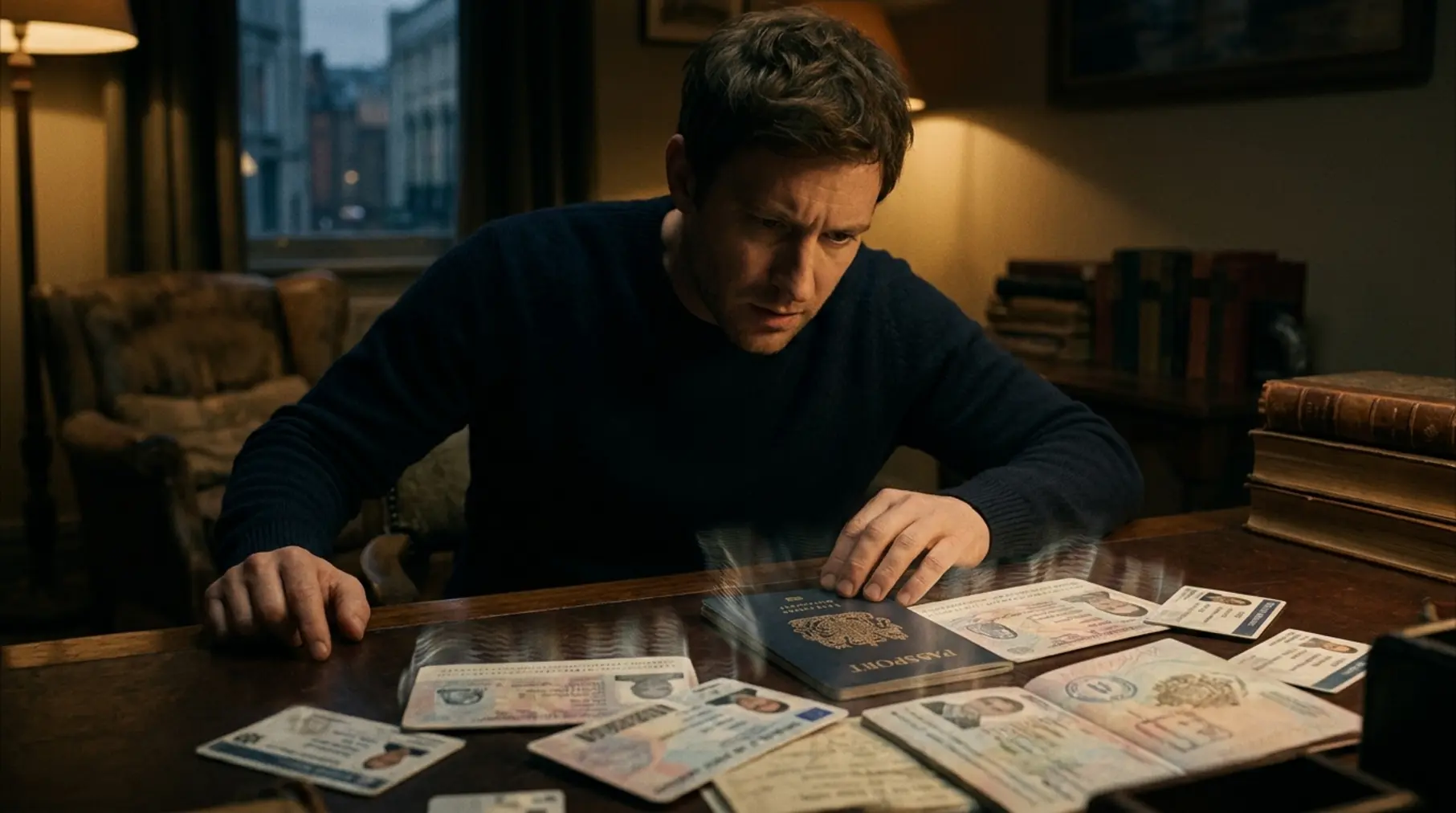
A passport is often considered the most definitive form of identification, which is precisely why scammers favor it. A seemingly official passport scan can feel irrefutable. However, these forgeries are often riddled with errors if you know what to look for.
- Inconsistent Fonts and Spacing: Official documents use specific, standardized fonts. Look closely at the text. Are the fonts for the name, date of birth, and passport number uniform? Scammers often struggle to perfectly match the original typeface, leading to subtle but noticeable differences in font weight, size, or style. Spacing between letters or words might also be uneven.
- Poor Photo Quality or Integration: The passport photo should look natural. In many forgeries, the photo appears to be “pasted on.” You might see a faint digital outline around the person’s head, unnatural lighting that doesn’t match the rest of the document, or a background that is too perfect or digitally blurred. The photo itself is often stolen from someone else’s social media profile.
- Errors in the Machine-Readable Zone (MRZ): The two lines of text and chevrons (<<<<<) at the bottom of a passport page are the MRZ. This zone is not random; it contains checksums and specific data formats. There are online tools that can validate an MRZ. A scammer might simply type random characters or use an expired format, which a validator would instantly flag as incorrect.
- Digital Alteration Artifacts: Zoom in on the image file. Look for pixelation or blurriness around key areas like the name, date of birth, or signature. This can indicate that the original text was scrubbed and replaced. The signature itself might look digitized or be in a generic font, rather than a natural, handwritten script.
These documents are frequently used as “proof” that the scammer is preparing to travel to meet you, a key emotional milestone in many romance scams. The passport “proves” their intention, making their subsequent request for money for a plane ticket or visa fees seem legitimate.
Fabricated Work Badges and Company IDs
The “successful professional” persona is a common trope in romance scams. To back this up, scammers create fake work badges for prestigious-sounding companies, often in fields like engineering, architecture, or international trade. These are even easier to forge than passports because there is no universal standard for their design.
Red flags include:
- Generic Logos: Scammers will often use a low-resolution or slightly altered version of a real company’s logo, or a completely generic, clip-art style logo. A quick search for the real company’s branding can reveal inconsistencies.
- Vague Job Titles: Look for titles that sound important but are non-specific, such as “Project Manager” or “Field Engineer,” without any mention of a specific department or division.
- Lack of Security Features: Real corporate IDs often have security features like holograms, barcodes, or embedded RFID chips. While these may not be visible in a scan, the design might look too simple or flat, lacking the complexity of a genuine security badge.
- Typos and Grammatical Errors: Scrutinize every word on the badge. A typo in the company name, address, or even a simple word is a massive red flag that a professional organization would never allow.
The “Proof” of Military Service: Exploiting Respect and Honor
Posing as a soldier, particularly one deployed in a conflict zone, is a despicable but highly effective tactic. It provides a built-in excuse for poor communication (due to “security protocols”), an inability to video chat, and a compelling, emotional backdrop for requesting money. Scammers will forge military IDs, leave request forms, or official-looking letters to “prove” their service.
It is critical to understand a few fundamental truths about the real military:
- Military personnel are paid by their government and have access to medical care. They never need to ask civilians for money for medical treatment, food, or transportation.
- Military leave is an earned entitlement. A soldier does not need to pay a fee to a commander or a third party to be granted leave. Requests for money to “process leave papers” are always a scam.
- Communication from a war zone is restricted. A soldier is highly unlikely to have unlimited, private access to social media or dating apps.
Any document that is used as a pretext for a request for money related to these things is fraudulent. This particular type of deception preys on a victim’s patriotism and desire to help a hero, making it one of the most cruel forms of romance scams.
Beyond the Document: A Proactive Guide to Verification and Protection
Receiving a document should not be the end of your questions; it should be the beginning of your verification process. Trusting your gut instinct is important, but backing it up with independent research is essential. Do not rely on the “evidence” provided by the person you are investigating. Instead, become your own investigator.
Independent Verification: Your First Line of Defense
You have several tools at your disposal to check the claims of an online partner. These steps should be taken discreetly, without alerting the potential scammer that they are under scrutiny.
- Reverse Image Search: This is the most powerful tool in your arsenal. Take every photo they have sent you—profile pictures, casual snapshots, and especially the photo on their ID—and use services like Google Images, TinEye, or PimEyes to search for them online. You will often discover that the photos have been stolen from the social media profiles of an innocent person, a model, or a public figure.
- Demand a Live, Interactive Video Call: While scammers can use pre-recorded videos, a live call is harder to fake. Ask them to do something specific during the call, like wave their left hand, touch their nose, or show you a piece of paper with your name written on it. A refusal to do so, accompanied by excuses about a broken camera or poor connection, is a major red flag. Be aware of emerging deepfake technology, but for now, this remains a useful test.
- Verify Professional Claims: If they claim to work for a specific company, visit that company’s official website. Look for a public staff directory. You can also use professional networking sites like LinkedIn to search for their name and title at that company. If they don’t have a professional profile consistent with their claims, be suspicious.
- Scrutinize their Digital Footprint: Someone who is a real, established professional should have a digital history. Look for social media accounts, mentions in news articles, or participation in online communities that predate your relationship. A person with no verifiable online history is a significant cause for concern.
What to Do When You Suspect a Scam and How We Can Help
If your verification process reveals inconsistencies, or if your gut tells you something is wrong, you must act decisively to protect yourself.
First and foremost, stop all communication immediately. Do not confront them or accuse them of being a scammer. This can lead to them becoming aggressive or trying to manipulate you further. Block their number, email address, and social media profiles. Second, never, ever send them money, no matter how dire or convincing their story sounds. Any request for money is the ultimate red flag.
If you have already sent funds, it is crucial not to despair. Recovery is possible, but it requires specialized expertise. Victims of sophisticated romance scams often feel lost and unsure where to turn. This is where professional help becomes invaluable. At Nexus Group, we specialize in investigating these complex cases and tracing digital financial transactions. Our team of experts understands the methods scammers use to launder and hide funds, and we employ advanced techniques to track and recover your assets.
We believe that victims should not have to face further financial uncertainty while seeking justice. At Nexus Group, we understand the complexities of asset recovery. That’s why we offer a clear commitment to our clients: our client gets a guarantee of fund recovery or a refund. This promise removes the financial risk from seeking help and allows you to pursue justice with confidence.
The emotional toll of a romance scam is immense, but you do not have to go through it alone. Recognizing the forgery of a document is the first step toward reclaiming your power and your financial security. If you believe you have been targeted by a scammer using fake identity documents or any other deceptive tactic, do not hesitate to seek professional assistance. Contact us to schedule a free consultation and learn how we can help you on the path to recovery.
